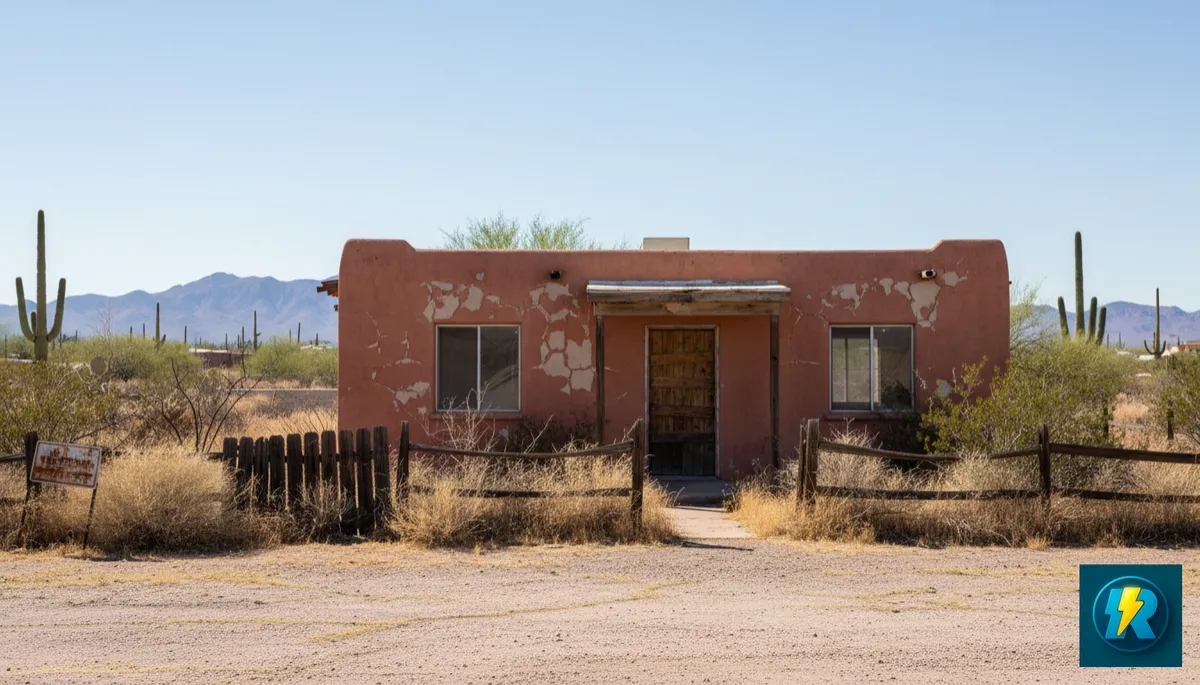
You moved out months ago — or maybe years ago. The house sits empty, the utilities are on a minimal plan, and every month you're paying property taxes on a place nobody lives in. Whether you inherited it, relocated for work, burned out as a landlord, or are caught between selling and moving, owning a vacant home in Tucson carries costs that most people don't fully see until they've added them up.
This guide lays out exactly what it costs — financially, legally, and practically — to leave a Tucson home sitting empty, and what your real options are for getting out from under it.
The Real Costs of a Vacant Tucson Home
The obvious costs are the ones on the statement: mortgage (if any), property taxes, HOA fees, and utilities. But the hidden costs are often worse.
Insurance coverage may disappear after 60–90 days. Standard homeowners insurance policies typically contain vacancy clauses that limit or void coverage once a home sits empty for 60 to 90 days. A fire, a burst pipe, a roof damaged in monsoon season — any of these events could leave you with a major loss and no payout. If your home is vacant for an extended period, you need to contact your insurer about a vacancy endorsement or a vacant-property policy, which typically costs more and covers less than standard coverage.
Tucson's desert climate is hard on empty homes. Monsoon season brings intense moisture, which promotes mold in enclosed, unventilated spaces. Summer heat — regularly exceeding 100°F — accelerates the deterioration of caulk, seals, wood framing, and roofing materials. Without regular maintenance, an unoccupied Tucson home can accumulate real physical damage within a single season.
Landscaping and pests don't stop when you leave. Overgrown or dead vegetation on a vacant property can trigger Tucson code enforcement complaints. Arizona pack rats and other desert pests move into empty structures quickly, and infestations left untreated can cause significant structural and wiring damage.
Property taxes keep coming. Arizona does not reduce property tax liability because a home is unoccupied. You're paying full assessed value taxes whether the house is full of furniture or completely empty.
Add it up over 12 months: taxes, insurance, utilities, minimal maintenance, and the opportunity cost of capital tied up in an asset that isn't working for you. For most owners, the number is sobering.
Tucson Code Enforcement and Vacant Structures
Tucson takes a proactive stance on vacant properties. Under the City of Tucson's Neighborhood Preservation Ordinance, Chapter 16 of the Tucson Code, vacant and unsecured buildings are explicitly unlawful. Section 16-14 imposes specific duties on the owner or responsible party of any vacant structure:
- Remove accumulations of weeds, combustible waste, or refuse from the interior and exterior
- Secure all doorways, windows, and openings to prevent unauthorized entry
- Post the property to prohibit trespassing
Tucson's Code Enforcement Division actively operates a Vacant and Neglected Structures program, through which inspectors investigate complaints and initiate enforcement actions on properties that violate these standards. A code violation notice can trigger a required remediation timeline, re-inspection fees, and — if left unresolved — escalating enforcement that can affect your ability to sell the property cleanly.
If a neighbor or passerby reports your vacant home for overgrown weeds, an unsecured door, or visible disrepair, you may receive a notice of violation requiring action within a specific timeframe. Failing to respond can result in the city abating the nuisance and billing you for the cost. Always verify current enforcement requirements directly with the City of Tucson Code Enforcement Division.
Squatters and Arizona's Adverse Possession Laws
Vacant homes attract unauthorized occupants. This is not hypothetical — Tucson and the surrounding region have tens of thousands of vacant housing units, and vacant properties are frequently targeted by squatters, particularly those left unsecured or visibly unmonitored.
What most Arizona homeowners don't realize is that squatters can, under certain circumstances, eventually assert a legal claim to a property. Arizona Revised Statutes §§ 12-521 through 12-527 govern adverse possession, which allows a person who occupies real property openly, continuously, exclusively, and without the owner's consent to eventually claim legal title.
The timeframes matter:
- 10 years: The standard adverse possession period under ARS § 12-526, where the occupant has no claim of title and pays no taxes.
- 5 years: Under ARS § 12-525, if the occupant holds a recorded deed to the property AND has been paying property taxes throughout the occupation period.
- 3 years: Under ARS § 12-523, if the occupant holds "color of title" — a chain of documents suggesting ownership even if technically defective.
While a successful adverse possession claim requires meeting strict legal standards (and most attempts fail), the process of removing a squatter even before any adverse possession claim arises can be time-consuming and expensive. Under ARS § 13-1502, unauthorized entry is criminal trespass, and police can assist with removal. But squatters who forge lease agreements or claim tenancy complicate the process and often require formal eviction proceedings.
Practical steps to reduce risk on a vacant property:
- Visit and document the property monthly, with dated photos
- Secure all doors, windows, and access points
- Install motion-activated lighting and visible security cameras
- Post "No Trespassing" signs on all access points
- Stay current on property taxes — this removes one of the faster adverse possession pathways
- Ask a trusted neighbor to report activity
The longer the property sits empty, the more exposure you carry. This is one of the strongest arguments for deciding on a course of action sooner rather than later.
Your Options for Selling a Vacant Tucson Home
Once you decide to sell, you have two main paths — and the right one depends on your timeline, the property's condition, and how much carrying cost you can absorb.
Option 1: List on the MLS with a Real Estate Agent
Cost: Agent commissions (typically 5–6% of sale price), potential repair costs to pass inspection or attract retail buyers, staging or cleaning expenses, and continued carrying costs during a listing period that can run 30–90+ days.
Time: Weeks to months, depending on condition and market conditions. Vacant homes often show poorly — buyers notice the absence of furniture, any deferred maintenance is visible, and lenders can be reluctant to finance homes showing significant deterioration.
Risk: If the home has code violations, deferred maintenance, or visible damage from sitting empty, it may not qualify for conventional financing. That shrinks your buyer pool to cash buyers anyway — but you'd still be paying agent commission and listing costs to get there.
Actual net: Can yield the highest gross price if the home is in good condition and the market cooperates — but carrying costs during the listing period, repair costs, and commissions reduce actual net proceeds significantly.
Option 2: Sell Directly to a Cash Buyer
Cost: No agent commissions, no repairs, no staging. The offer reflects as-is condition — but you pay nothing out of pocket.
Time: Closings can happen in as little as 7–14 days, ending your carrying costs, insurance exposure, and code enforcement risk immediately.
Risk: Low. Cash transactions are straightforward — no financing contingencies, no appraisal requirements, no lender inspections.
Actual net: Lower gross price than a perfect retail listing, but when you subtract commissions, repair costs, and months of carrying costs from the retail scenario, the gap often closes substantially. For a vacant home with maintenance issues or code concerns, selling directly frequently results in a comparable or better actual net.
For many Tucson owners of vacant homes, the math favors speed. Every month of delay costs money in taxes, insurance, maintenance, and risk. If you want to understand exactly where your vacant property stands and what a direct sale would look like, contact Rapid Close Realty for a no-pressure conversation.
Special Situations: Inherited, Out-of-State, and Landlord-Owned Vacant Homes
Inherited vacant homes carry the added complexity of probate or trust administration, which can extend the timeline before the property can legally be sold. If you've recently inherited a Tucson home and are trying to figure out your options before spending money on it, our guide on inherited properties and repairs covers the key decisions you'll face.
Out-of-state owners face the greatest exposure on a vacant Tucson property. You can't monitor it personally, you're not nearby if a code enforcement notice arrives, and the Tucson heat and monsoon seasons can create damage you don't discover until it's substantial. See our full guide on selling as-is in Tucson for options tailored to remote owners.
Landlords with empty rentals should be thinking about whether the math still works. If the unit has been vacant for more than a few months, you've already absorbed real cost. Our guide to selling rental property in Arizona covers the full landscape — including the decision framework for whether to re-rent or exit.
Frequently Asked Questions
Does my homeowners insurance cover a vacant home in Arizona?
Standard policies typically limit or void coverage after the home has been empty for 60–90 days. Contact your insurer before that window closes to discuss a vacancy endorsement or separate vacant-property policy. Without it, you may have no coverage for fire, vandalism, or weather damage.
Can someone claim my vacant Tucson home through adverse possession?
Yes — though it requires satisfying strict legal requirements over a minimum of 3 to 10 years under Arizona law (ARS §§ 12-523, 12-525, 12-526). The more immediate risk is squatters and the cost and disruption of removing them. Regular monitoring, security, and staying current on property taxes significantly reduce your exposure.
Will Tucson fine me for leaving a home vacant?
Not simply for being vacant — but if the property becomes unsecured, accumulates debris, or otherwise violates Tucson's Neighborhood Preservation Ordinance (Tucson Code Chapter 16), you can face code enforcement action, required remediation, and re-inspection fees. Consult the City of Tucson Code Enforcement Division for current requirements.
Do I have to fix up a vacant home before selling?
Not if you sell directly to a cash buyer. Cash buyers purchase properties as-is — including vacant homes with deferred maintenance, code issues, or cosmetic damage from sitting empty. You close on your timeline without repair costs or inspections.
How long does it take to sell a vacant house in Tucson?
A direct cash sale can close in as few as 7–14 days. A traditional MLS listing typically takes 30–90+ days, and vacant homes often sit longer because they show poorly and may face financing hurdles with retail lenders.
The Bottom Line
A vacant home in Tucson is not a neutral situation. Every month it sits empty, you're absorbing real cost — taxes, insurance risk, potential code enforcement, maintenance, and security exposure. The sooner you decide on a path forward, the less you lose.
If you're ready to stop carrying a vacant property and want to understand what a fast, straightforward sale looks like, reach out to Rapid Close Realty. We work with Tucson homeowners in exactly this situation — no repairs required, no agent fees, no waiting. We'll give you a clear picture of your options and a fair offer if it makes sense for you.
You can also visit our FAQ page to learn more about how our process works, or explore our guide to selling fast in Tucson for a broader look at your options.