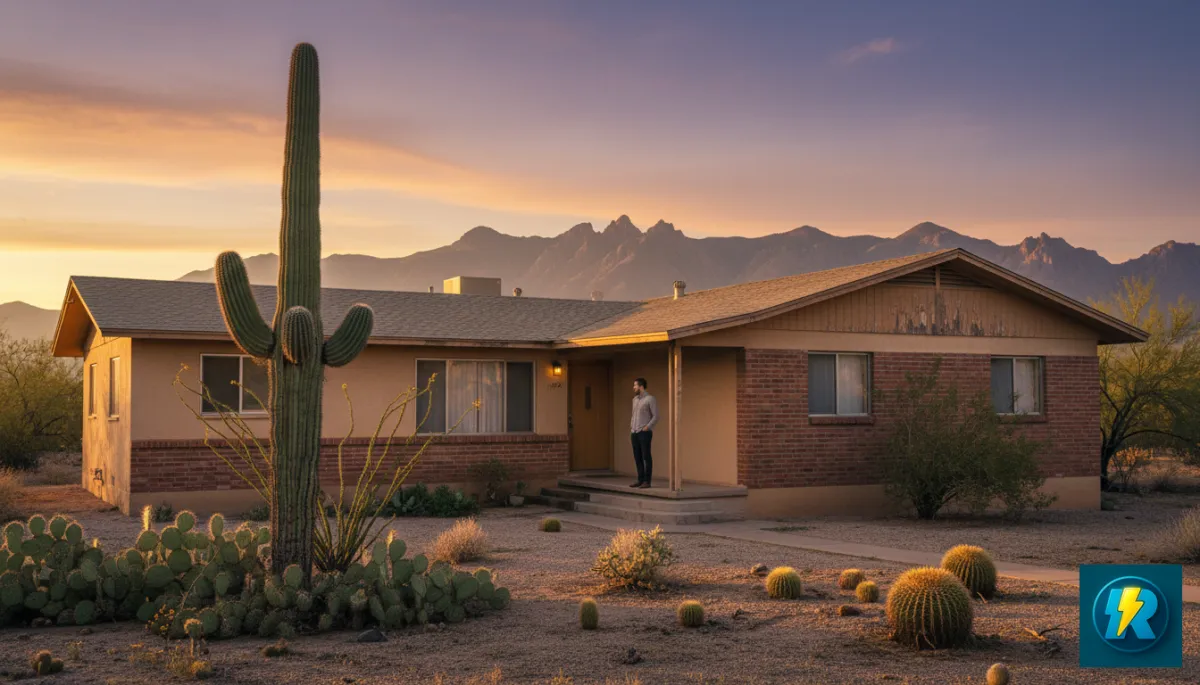
Inherited a House in Tucson? What to Decide Before You Spend Money on Repairs
Inheriting a home is rarely simple. You're managing grief while fielding calls about utility bills, HOA dues, and relatives who all have different opinions about what should happen to the property. And somewhere in the middle of all of that, someone suggests you fix the place up before deciding.
That instinct makes sense emotionally. But it often leads people to spend thousands of dollars before they've answered the most basic questions about what they actually own, what it costs to hold, and what it's realistically worth.
Before you call a contractor, here's what you need to figure out first.
What Do You Actually Own Right Now?
This sounds obvious, but the legal reality of inheriting a home is more complicated than most people expect.
Does the Property Need to Go Through Probate?
In Arizona, most inherited properties must pass through probate before they can legally be sold — unless the home was held in a living trust or transferred via a transfer-on-death deed. For Tucson properties, probate is filed with Pima County Superior Court.
Informal probate — used when there is no dispute about the will or heirs — typically takes six to eight months in Arizona. Formal probate, required when there are contested wills, disputed heirs, or other complications, can take a year or longer. Arizona law requires the estate to remain open for a minimum of four months regardless, to allow creditors time to file claims.
If the estate is relatively small, Arizona's simplified process may apply. As of September 26, 2025, Arizona law allows estates with real property valued up to $300,000 (based on the county assessor's full cash value, minus liens) and personal property up to $200,000 to use a Small Estate Affidavit rather than full probate (A.R.S. § 14-3971). The rules include specific conditions and waiting periods. Consult an Arizona probate attorney to determine whether your situation qualifies — the affidavit process has more complexity in practice than it appears on paper.
Who Has Legal Authority to Sell?
Only the court-appointed personal representative (sometimes called the executor) has legal authority to sell the property during probate. That authority is formalized in a document called Letters Testamentary. Without it, no sale can close. If there are multiple heirs — siblings, for example — they typically all need to agree before the property can move forward. When heirs disagree, that disagreement becomes the primary obstacle, regardless of the property's condition.
Understand the Financial Picture Before You Spend Anything
Once you have clarity on ownership and legal status, the next step is understanding exactly what the property costs you to hold — and what it's worth.
- Existing mortgage or liens. A mortgage does not disappear when someone passes away. Reverse mortgages, contractor liens, unpaid HOA dues, or judgment liens may also be attached to the property. These must be resolved at or before closing. A title search will reveal everything tied to the deed.
- Property taxes. Pima County property taxes are billed twice a year. An inherited property sitting in probate can fall behind quickly if no one is actively managing it. Delinquent taxes accrue interest and can eventually result in a tax lien, which complicates any future sale.
- Insurance. Most homeowner's insurance policies include vacancy clauses. A home that sits vacant — which inherited properties often do — may no longer be covered under the existing policy. Contact the insurer early to understand your exposure.
- Utilities and ongoing carrying costs. Even an empty Tucson home costs money. Utilities, pest control, and basic maintenance in the desert climate add real monthly expenses while you're still figuring out what to do.
The Case Against Rushing Into Repairs
Here's where most heirs make their most expensive mistake: deciding to fix things up before understanding what the property will realistically sell for in its current condition.
A few things to work through before a contractor sets foot in the door:
- Get an independent property valuation first. Find out what the home is worth as-is, and what it might be worth after updates. The difference is the theoretical upside of making repairs — but that upside is almost never fully recovered after factoring in labor, materials, time, and ongoing holding costs.
- Get honest, competitive repair estimates. Not one estimate — two or three, from contractors who don't have a financial stake in doing the work. Repair projects in older Tucson homes, where heat and age affect everything from stucco to plumbing, frequently cost significantly more than initial quotes.
- Respect the timeline. Every month a repair project runs, you're paying carrying costs, taxes, and insurance on a property you may not even be ready to list yet. Time is money in a way that's easy to underestimate.
- Deal with belongings first. Many inherited homes come with a lifetime of accumulated belongings. The cost, time, and emotional weight of sorting, donating, and removing those items is real — and consistently underestimated before it starts.
For a closer look at what selling as-is actually means in practice, see our guide: Selling Your Tucson House As-Is.
Your Selling Options — A Fair Look at Each
Once you understand what you own and what it's worth, you have several realistic paths forward. No single option is right for every situation — what matters is understanding the true cost, timeline, risk, and actual net proceeds across each before committing.
Traditional MLS Listing After Repairs
If the home has good bones, a desirable Tucson location, and the estate has the cash and time to make targeted improvements, a traditional listing may produce a higher gross sale price. This path works best when probate is complete, ownership is clear, heirs agree, and repair estimates are realistic relative to their projected return.
MLS Listing As-Is
Selling as-is on the MLS means listing in current condition, disclosed to buyers. Buyers factor needed repairs into their offers, and some lenders may not finance homes with certain conditions — which limits the buyer pool. But you avoid upfront repair costs and still reach a broad market. A real estate agent experienced with as-is sales in Tucson can help set realistic pricing expectations.
Direct Sale to a Cash Buyer
A cash buyer purchases the property in its current condition, typically without a financing contingency, and often in a faster timeline. Cash offers are generally lower than a fully repaired, retail-ready sale price — but when you subtract realistic repair costs, agent commissions, carrying costs during renovation, and closing concessions, the difference in actual net proceeds can be smaller than it first appears.
The right question isn't which offer looks biggest on paper. It's which option produces the best actual net in your actual situation, given your timeline, probate status, and property condition.
Creative Structures and Coordinated Solutions
Depending on the property and the heirs' needs, other approaches may be worth understanding — including novation strategies, coordinated cleanout assistance, flexible closing timelines, or solutions designed for out-of-state heirs managing the process remotely. These aren't the right fit for every situation, but knowing they exist expands your options.
When Multiple Heirs Are Involved
When a property is inherited by more than one person, every decision requires agreement. That's sometimes straightforward and sometimes genuinely difficult — especially when heirs live in different states, have different financial needs, or have different emotional connections to the property.
If you're an out-of-state heir dealing with a Tucson property, understand that the longer a vacant home sits, the more it costs — and the more its condition can deteriorate in the Arizona heat. Getting everyone aligned on a clear plan, rather than each person defaulting to their comfort zone, is usually what moves things forward.
Common Mistakes to Avoid
- Spending money on repairs before confirming probate and title status
- Assuming repair costs will be recovered at sale — they often aren't
- Letting the property sit vacant without addressing the insurance situation
- Assuming all heirs agree when that conversation hasn't actually happened
- Making decisions under time pressure without comparing the full cost, timeline, and actual net across all options
Frequently Asked Questions
Can I sell an inherited house in Tucson before probate is complete?
In most cases you cannot transfer full title until probate closes. However, in some situations a sale can be placed under contract while probate is still open, with closing contingent on probate completion. An Arizona estate attorney and a title company familiar with probate transactions can clarify what's possible in your specific case.
Do I owe taxes when I sell an inherited property in Arizona?
Arizona has no state inheritance tax or state estate tax. When you inherit a property, the cost basis is typically "stepped up" to the fair market value on the date of the previous owner's death — which can significantly reduce capital gains tax if you sell relatively soon after inheriting. Individual tax situations vary. Consult a CPA familiar with Arizona real estate transactions before making assumptions.
What if the house still has a mortgage?
The mortgage doesn't disappear at death. The estate becomes responsible for it. If payments fall behind during probate, the lender can still initiate foreclosure proceedings. Understanding the mortgage balance, payment status, and loan type early is important — especially if there's a reverse mortgage involved, which has different rules than a standard loan.
What if we can't afford to make repairs?
Selling as-is — either on the MLS or directly to a buyer — is a real and legitimate option. The key is understanding what the property is worth in its current condition versus what you would actually net after repairs, costs, commissions, and time. Those two numbers are often much closer than people initially expect.
Does the house have to be emptied before it can be sold?
Not necessarily. Some buyers can purchase properties with belongings still inside, and some situations allow for coordinated cleanout support as part of the process. This varies by buyer and by transaction — it's worth asking directly when evaluating your options.
The Bottom Line
Before you commit to a repair plan, take the time to understand what you own, who has legal authority to act, what financial obligations are attached to the property, and what it's realistically worth in its current condition. Then compare your options honestly — cost, timeline, risk, and actual net proceeds — before deciding which path fits your situation.
Every inherited property is different. Before spending thousands on repairs or committing to one selling strategy, Rapid Close Realty can help you compare your options, timeline, costs and potential net proceeds so you can make an informed decision rather than an expensive one.
Have general questions about the process? Visit our FAQ page for straightforward answers about how we work with homeowners in all types of situations.
Rapid Close Realty
Tucson, Arizona
https://rapidcloserealty.com
We don't just make offers — we provide real solutions tailored to the property and homeowner's situation.