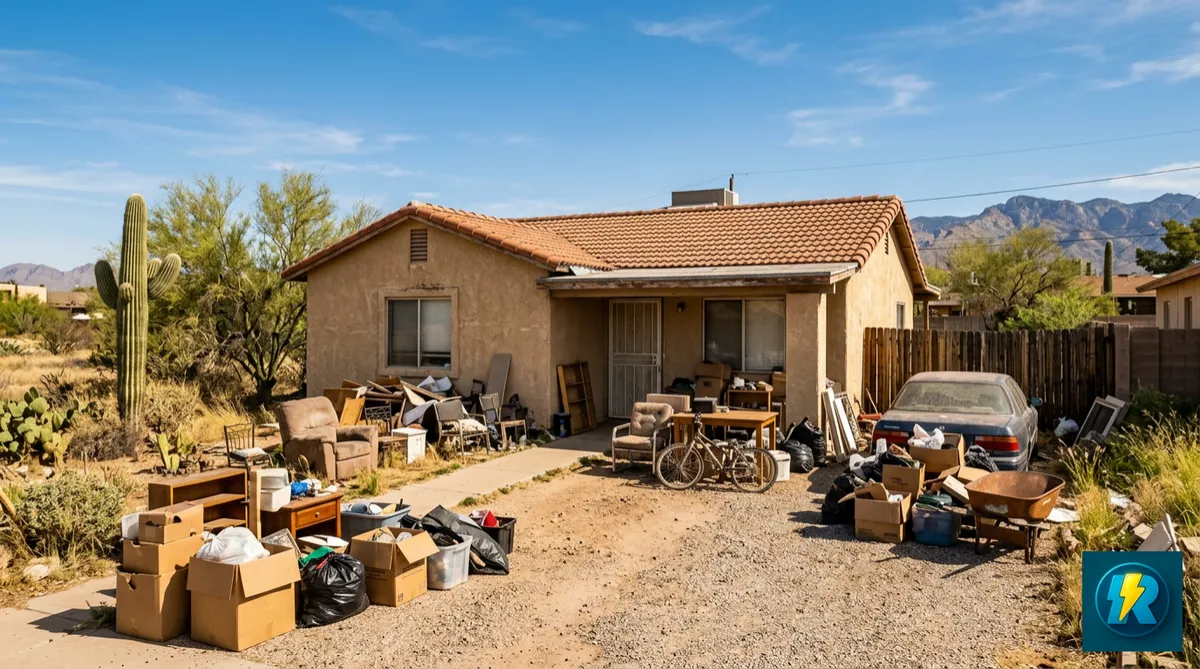
Selling a Hoarder House in Tucson, AZ: Cleanup Costs, Disclosure Rules, and Your Real Options (2026)
If you're facing the sale of a hoarder house in Tucson — whether it's your own home, an inherited property, or a place you've been managing for a family member — you already know the practical challenges are real. The clutter is overwhelming. The condition of the house is uncertain. And the thought of getting it market-ready feels impossible.
What you may not know is that Arizona law imposes specific disclosure duties on hoarder-property sellers, Tucson's code enforcement division actively cites these properties, and the cleanup costs many owners expect to solve the problem often don't deliver the return they hope for. This guide walks you through what's actually required, what cleanup realistically costs, and what your options look like on the ground — including selling as-is to a buyer who will handle the property exactly as it is.
Let's start with the basics, then get into the numbers and the decision framework you need.
What Qualifies as a "Hoarder House" — and Why It Matters for the Sale
Hoarding disorder affects between 2 and 6 percent of the general population. The International OCD Foundation describes it as persistent difficulty discarding possessions — regardless of their actual value — to the point where living spaces can no longer be used as intended. It is a recognized medical condition, not a lifestyle choice, and it affects families across Tucson and throughout Pima County.
From a real estate standpoint, a hoarder house isn't just a cleaning problem. Depending on how long accumulation has occurred and what was stored, you may be dealing with:
- Structural concealment: Years of accumulated items can hide roof leaks, water intrusion, cracked drywall, deteriorated flooring, and pest damage that remained unaddressed for years.
- Pest and vermin activity: Rodents, cockroaches, and other pests find ideal habitats in heavily cluttered homes. Infestations can be extensive by the time the property is vacated or sold.
- HVAC and electrical system damage: Blocked vents, covered electrical panels, and pets or vermin chewing through wiring are common findings during post-hoard inspections.
- Biohazard contamination: In severe cases, animal waste, human waste, spoiled food, and chemical accumulation can make portions of the home hazardous under environmental health standards.
- Odor penetration: Pervasive odors from animals, food, and mold can saturate drywall, insulation, and subfloors — and they don't disappear with surface cleaning.
Why does this matter for the sale? Because Arizona law treats physical consequences of hoarding — pest infestation, structural damage, sanitation issues — as material facts you are legally required to disclose to any buyer, regardless of how much cleanup you do before listing.
Tucson Code Enforcement: When the City Gets Involved
The City of Tucson's Code Enforcement Division is responsible for enforcing property maintenance codes throughout the city. These codes establish minimum standards for both the interior and exterior condition of residential buildings, and the division actively runs anti-blight initiatives. Violations are typically triggered by complaints from neighbors, utility providers, or city inspectors doing area sweeps.
For a hoarder property, common code violations include:
- Exterior accumulation of debris, junk, or materials blocking right-of-way access
- Infestation evidence visible from the exterior (rodent activity, nesting)
- Unsafe or uninhabitable interior conditions under Chapter 16 of the Tucson City Code (Neighborhood Preservation)
- Vegetation and objects obstructing public pathways or fire access
When a complaint is filed, a code inspector will typically mail an Opportunity to Correct (OC) notice to the property owner describing the nature of the violation and citing the applicable code. If the violation isn't corrected within the stated timeframe, the city can escalate — including abating the nuisance itself and billing the owner for costs, or referring the matter to the city attorney's office. Active code violations must be disclosed to buyers, and they can also cloud a title or complicate the sale timeline.
If you've received a code notice — or you're concerned one may be coming — that's an important factor in deciding how quickly you need to move on the property and which selling path makes the most sense for your situation.
Arizona Disclosure Requirements: What You Must Tell Every Buyer
Arizona sellers are legally required to disclose all known material facts about a property — defined as any fact a reasonable buyer would want to know when making a purchase decision or determining a price. This obligation exists under Arizona law regardless of whether you complete a formal disclosure form.
In practice, most Arizona residential transactions use the Seller's Property Disclosure Statement (SPDS), a detailed form developed by the Arizona Association of REALTORS® that covers structural and mechanical systems, environmental hazards, property history, utilities, HOA details, and other known material facts. Under the standard Arizona residential purchase contract, the completed SPDS must be delivered to the buyer within three days of contract acceptance.
For hoarder properties specifically, Arizona real estate law is direct: if a hoarding situation caused pest infestation or structural damage, those are physical conditions that are squarely disclosable. This means that even if you spend significant money cleaning the property before listing, you are still required to disclose on the SPDS that past pest infestations, sanitation issues, or structural problems existed — because you know about them.
Two other points that catch sellers off guard:
- Selling as-is doesn't waive disclosure. Even in an as-is transaction in Arizona, sellers must still be truthful and transparent about known material defects. "As-is" defines the condition the buyer accepts; it does not waive your obligation to tell them what you know.
- Liability survives closing. The seller's warranty that all known material defects have been disclosed survives closing under the standard Arizona contract. If a buyer discovers post-closing that you knew about a problem and didn't disclose it, you can face civil liability — including for fraud or misrepresentation — generally within a three-year limitation period from when the buyer discovered or should have discovered the issue.
Working with a real estate attorney to review your SPDS before listing a hoarder property is strongly recommended. For more on Arizona's standard disclosure requirements, see our article on selling a Tucson home as-is.
The Real Cost of Cleanup: What Sellers Often Underestimate
Many sellers assume that a thorough cleanup will unlock top-dollar offers and a smooth listing. Sometimes it does. But for moderate-to-severe hoarding situations, the costs and timelines are frequently much larger than expected — and the return on investment often disappoints.
Here is a realistic cost range for each phase of a hoarder-property cleanup in the Tucson area:
- Junk removal and content clearing: $2,000–$15,000+ depending on volume, weight, and disposal complexity. Hazardous material (chemicals, paint, biological waste) requires licensed disposal and adds significant cost.
- Biohazard or specialty cleaning: $3,000–$20,000 for properties with vermin activity, animal waste accumulation, or sewage-related contamination. Standard cleaning crews cannot legally handle biohazardous materials.
- Pest extermination and remediation: $1,500–$8,000 depending on infestation type and spread. Severe rodent infestations may require structural repairs after extermination.
- Repairs uncovered during or after cleanup: Often the largest unknown. Roof damage, flooring replacement, drywall repair, electrical system work, and HVAC servicing can collectively add $20,000–$60,000+ in moderate-to-severe cases.
- Odor remediation: $2,000–$10,000 if odors have penetrated building materials. May require ozone treatment, encapsulation products, or drywall replacement.
Total cleanup-and-repair costs for a moderate hoarder property in Tucson can easily run $30,000–$80,000 — and that's before you've paid for staging, photography, agent commissions (typically 5–6%), and holding costs while the work is completed. After a 90-to-180-day cleanup-and-listing timeline, many sellers find their net proceeds are not meaningfully higher than what a direct cash sale would have delivered — especially once you factor in the disclosure obligation, which remains regardless of cleanup.
Your Options Compared: Cleanup and List vs. Sell As-Is
Here is a COST + TIME + RISK + ACTUAL NET comparison of the two main paths:
Option 1: Clean Up, Repair, and List on the MLS
- Upfront cost: $30,000–$80,000+ in cleanup, repairs, and prep
- Time to close: 4–9 months (cleanup + listing + negotiation + inspection period)
- Risks: Inspection findings derail the sale; buyer backs out after SPDS review; lender won't approve financing on a disclosed hoarder property; disclosed history still drives offers down; carrying costs mount
- Actual net: Potentially higher gross price, but hard to recover full cleanup investment. Financing buyers are often very cautious about disclosed hoarding history.
Option 2: Sell As-Is to a Cash Buyer
- Upfront cost: Zero — the buyer handles cleanup, remediation, and repairs
- Time to close: 7–21 days after agreeing on terms
- Risks: Lower gross offer than a fully renovated MLS listing
- Actual net: Often comparable or better when you subtract cleanup costs, agent commissions, holding costs, and extended timelines from the MLS path. No repair negotiations, no inspection contingencies, no financing fall-through risk.
For many Tucson homeowners dealing with a hoarder property, the as-is path delivers more certainty, less stress, and a faster resolution — without requiring you to spend tens of thousands of dollars on a property you're trying to move away from. Contact Rapid Close Realty to get a no-obligation cash offer on a Tucson hoarder house. We buy properties in any condition, with no judgment and no cleanup required on your part.
You can also review general guidance on the Tucson as-is selling process at our FAQ page, or see how our process compares in our guide to selling a house fast in Tucson.
Frequently Asked Questions
Do I have to disclose a hoarding history even if I've already cleaned the house?
Yes. Under Arizona law, you must disclose known material facts — including physical consequences of past hoarding such as pest infestations, structural damage, or sanitation problems — regardless of whether those conditions have been remediated. The disclosure obligation is based on what you know, not on current condition.
Can Tucson code enforcement force me to clean up a hoarder property before I sell?
Yes, potentially. If a code violation exists on the property — exterior debris accumulation, blight conditions, infestation evidence — the city can require remediation within a defined timeframe. Active violations should be addressed proactively or factored into a selling timeline. A cash buyer experienced with hoarder properties may be able to close quickly enough to resolve the code situation through the sale itself.
Will a conventional mortgage lender finance the purchase of a hoarder house?
Typically no — at least not in its current condition. Most conventional lenders require the property to be in livable condition to approve financing. FHA and VA loans have even stricter property condition requirements. This is a major reason why hoarder-property sales often fall through when a buyer with a mortgage loan contingency discovers the disclosed history or inspection findings. Cash buyers are not subject to lender appraisal requirements, which is a significant practical advantage in these situations.
What if I inherited the hoarder property and don't know the full history?
You are required to disclose what you actually know. If you lack personal knowledge of the property's condition or history, you should state that on the SPDS rather than guessing. Heirs often face the additional complexity of needing to go through probate before they can sell — see our guide on what to decide before making repairs on an inherited Tucson home for a fuller discussion. If the estate is still in process, a cash buyer can often work with you on timing.
How quickly can I sell a hoarder house in Tucson if I don't want to clean it up?
Working with a local cash buyer like Rapid Close Realty, many hoarder-property transactions close in 7 to 21 days from first contact — without any cleanup, repairs, or staging on your part. You leave behind whatever you don't want, and we handle the rest. Reach out today to start a confidential conversation about your property and timeline.
The Bottom Line
Selling a hoarder house in Tucson is a manageable process — but only when you understand the real rules and the real numbers. Arizona's disclosure requirements don't disappear with a cleaning crew. Tucson's code enforcement division will cite and escalate unresolved blight conditions. And the math on cleanup-and-list versus sell-as-is often comes out much closer than sellers expect, especially once time, stress, and uncertainty are factored in.
At Rapid Close Realty, we work with Tucson homeowners in exactly these situations — no pressure, no judgment, and no requirement to clean a single room before we make an offer. If you're ready to talk about your options, contact us here and we'll get back to you the same day.