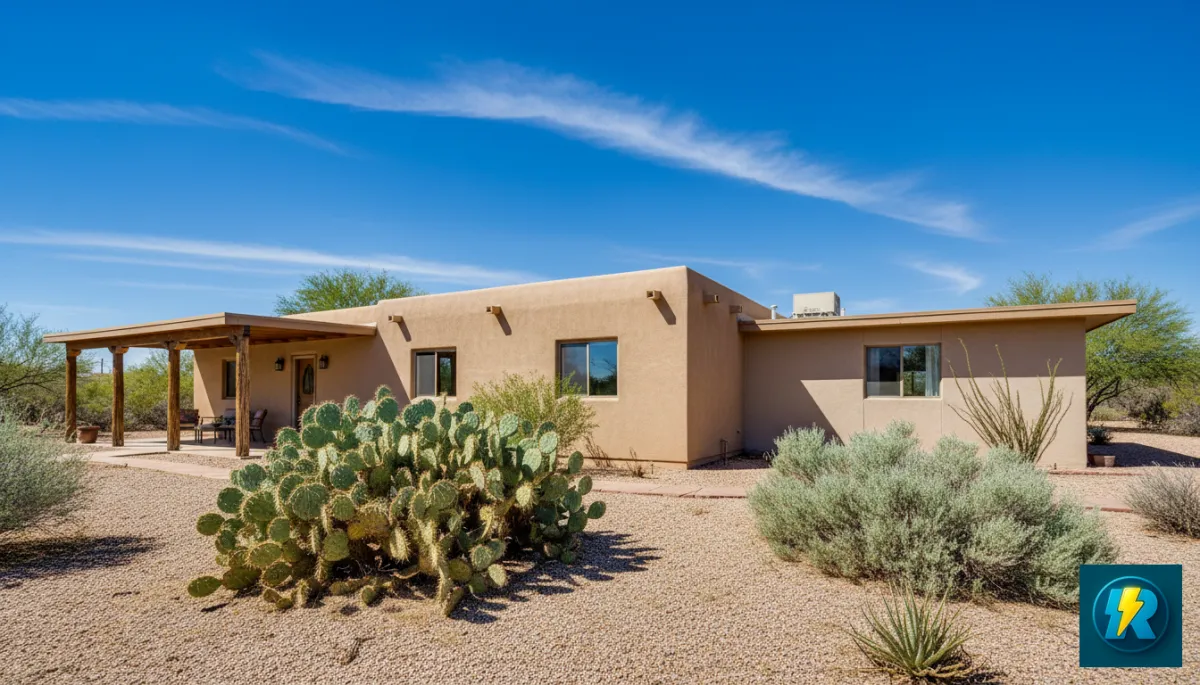
Selling a House With Code Violations or Unpermitted Work in Tucson, AZ
Selling a House With Code Violations or Unpermitted Work in Tucson, AZ
You were ready to sell. Then — through a home inspection, a neighbor complaint, or a title search — something surfaced: a room addition, a garage conversion, a covered patio, or a pool that was never permitted. Or maybe the City of Tucson has already sent a code enforcement notice to your door.
You are not alone. Unpermitted work is one of the most common title and transaction complications Tucson home sellers face, particularly in older neighborhoods where improvements were made decades ago without a second thought about permits. The good news is that you have real, concrete options — and understanding them clearly is the difference between a stressful, deal-killing surprise and a clean, confident exit from your property.
What Requires a Permit in Tucson?
Building permit requirements in the Tucson area are administered by two separate agencies, depending on where your property sits:
- Within Tucson city limits: The City of Tucson Planning & Development Services Department (PDSD) issues permits and enforces code compliance. Applications are submitted through the Tucson Development Center Online portal.
- Unincorporated Pima County: Properties outside Tucson city limits fall under Pima County Development Services, which has its own application process and review timelines.
As of January 1, 2026, Tucson adopted the 2024 International Building Code (IBC) and 2024 International Residential Code (IRC) with local amendments. All permit applications submitted on or after July 1, 2026 must comply with these updated codes. A permit is generally required for any project affecting the structure, safety systems, or use of a home. The most common unpermitted improvements PDSD sees in Tucson include:
- Room additions and converted garages — among the most frequent issues in older Tucson homes
- Covered patios, ramadas, and attached carports — shade structures are popular in the Sonoran Desert, but structural attachments to the home require permits
- Swimming pools and spas — required to meet both building and barrier codes (Arizona Administrative Code Title 18, Chapter 5 governs public and semi-public pools; residential pools have their own permit and barrier requirements)
- Electrical work — governed by the 2023 National Electrical Code as adopted by Tucson, effective January 1, 2026; even panel upgrades and sub-panel additions require a permit
- HVAC replacements and water heater installations — equipment swaps typically require trade permits in Tucson
- Interior remodels affecting structural or life-safety elements — removing load-bearing walls, rerouting plumbing, or altering fire-rated assemblies all require permits
If you are unsure whether a particular improvement on your property was permitted, you can look up your property's permit history through the City of Tucson Planning & Development Services website or contact PDSD directly.
Arizona's Disclosure Rules: What You Are Required to Tell Buyers
This is where many Tucson sellers make a costly mistake: they assume that selling a home "as-is" releases them from any obligation to disclose code violations or unpermitted work. Under Arizona law, it does not.
Arizona's seller disclosure duty is rooted in common law, confirmed by the Arizona Supreme Court in S. Development Corp. v. Pima Capital Management Co., 201 Ariz. 10 (2001): sellers must disclose all known material facts that could affect the value or desirability of the property. This obligation exists regardless of whether the sale is marketed as-is, sold by owner, or handled through a real estate agent.
In practice, this means completing the Seller's Property Disclosure Statement (SPDS) — the standard Arizona Association of Realtors form used in virtually all residential transactions. The SPDS directly asks:
- Whether the seller is aware of any unpermitted construction on the property
- Whether any improvements were made without the required building permits
- The condition and permit status of pools, spas, and major systems
Failing to disclose what you know exposes you to serious legal consequences — including rescission of the sale, repair cost damages, and, in cases of intentional concealment, fraud claims — even long after closing. The duty to disclose runs until the deed is delivered, which means you must update your SPDS if you learn something new during escrow.
One additional note: if your property is located in an unincorporated area of Pima County and is not part of a recorded subdivision, Arizona Revised Statutes § 33-422 also requires a written Affidavit of Disclosure to be delivered to the buyer at least seven days before the transfer of title.
The bottom line is simple: disclose everything you know. The legal exposure from concealment is far greater than any price negotiation that follows honest disclosure.
How Unpermitted Work Affects Your Sale
Beyond the disclosure obligation, unpermitted work creates real friction throughout the selling process — especially with buyers who need financing.
Lender and appraisal hurdles: FHA-insured loans and VA loans require the property to meet specific minimum property standards. FHA appraisers are trained to flag code violations and unpermitted additions that affect habitability or safety. If an appraiser flags an issue, the lender may condition the loan on remediation — blowing up a deal that is already weeks into escrow. Conventional loans are more flexible, but appraisers may still exclude unpermitted square footage from the home's calculated value, causing the appraisal to come in below the purchase price.
Buyer negotiation leverage: Even buyers willing to proceed after disclosure typically use unpermitted work as a bargaining chip — requesting a price reduction, a closing cost credit, or a seller-funded repair escrow. Buyers who discover unpermitted work during their own due diligence (not from your disclosure) may use it to renegotiate terms or terminate during the inspection period.
Insurance complications: Unpermitted additions can complicate homeowners insurance coverage. If damage occurs in an area built without permits, an insurer may deny the claim on the grounds that the structure did not meet code at the time it was built. This is a risk a buyer's lender will weigh carefully at underwriting.
Your Three Options — Compared
When selling a Tucson home with code violations or unpermitted work, you have three realistic paths forward. Here is how they compare across what actually matters: Cost, Time, Risk, and Actual Net Proceeds.
Option 1: Retroactive Permitting — Legalize the Work Before Selling
Tucson's PDSD allows homeowners to apply for after-the-fact (retroactive) permits for work already completed. An inspector reviews the work as it currently exists — and may require partial demolition to access structural, electrical, or plumbing elements for inspection. If the work does not meet the applicable code, you must bring it up to standard before the permit is issued.
- Cost: Permit fees are based on project scope and valuation (contact PDSD for the current FY27 fee schedule). Remediation costs — the work required to bring non-compliant construction up to code — can range from a few thousand dollars to well beyond $20,000 depending on the scope of what needs correction or reconstruction.
- Time: Permit review timelines in Tucson vary significantly by project type, application completeness, and review lane. Allow for several weeks to several months at minimum, plus additional time for required corrections, re-inspections, and contractor scheduling.
- Risk: If the work is significantly non-compliant, the city may require removal and rebuild — a worst-case outcome that eliminates any cost savings from attempting to legalize in place.
- Actual Net: Highest potential sale price if successful — but only after absorbing the out-of-pocket permit, remediation, and carrying costs. This path makes sense when the unpermitted work is largely code-compliant, remediation costs are modest, and you have the time and cash to see it through.
Best for: Sellers with a flexible timeline, minimal non-compliance issues, and adequate cash reserves for the permitting process.
Option 2: Sell on the Open Market with Full Disclosure
You disclose all known unpermitted work on the SPDS, price the home to reflect the issue, and market it to traditional buyers who are willing to take on the permitting themselves in exchange for a reduced price.
- Cost: Real estate commissions (typically 5–6% of the sale price), plus buyer-requested price reductions or repair credits related to the code issues.
- Time: 30–90 days to secure a buyer, plus a 30–45-day escrow — with meaningful risk of deal fallout if buyer financing hits a lender appraisal snag over the unpermitted work.
- Risk: Moderate to high. Financed buyers face lender hurdles. Deals that fall through after weeks of escrow cost you time, carrying costs, and a restart.
- Actual Net: Higher gross price than a cash offer on paper — but reduced by commissions, buyer credits, extended holding costs, and the real probability of deal fallout. The highest list price is not always the highest actual net.
Best for: Sellers with time flexibility, a home in otherwise good condition, and willingness to navigate the uncertainty of a traditional market process.
Option 3: Sell As-Is to a Cash Buyer
You sell the property in its current condition — code violations, unpermitted work, and all — to a cash buyer or real estate investor who has the expertise and capital to handle permitting after purchase. Learn more about selling your Tucson home as-is and what the process looks like in practice.
- Cost: No realtor commissions. No repair costs. No permit fees. No staging or showings.
- Time: Can close in as few as 7–14 days. No lender appraisal, no financing contingency, no inspection repair negotiation.
- Risk: Very low. No deal fallout from lender requirements or appraisal gaps.
- Actual Net: Lower gross price than a traditional sale — but when you factor in zero commissions, zero repair costs, zero carrying costs, and certainty of closing, the actual net is often comparable. And the speed and certainty carry real value that a number alone does not capture.
Best for: Sellers facing time pressure, active code enforcement deadlines, limited cash for remediation, or those who simply want a clean and certain exit without the complexity of a traditional sale.
Rapid Close Realty specializes in exactly this situation. We buy Tucson homes as-is — code violations, unpermitted additions, deferred maintenance included — with no realtor fees and no repair requirements. We will show you side-by-side what each option would likely net you so you can make the decision that works best for your situation. See our FAQ page for common questions about how the process works.
Frequently Asked Questions
Can I be sued after closing if I did not know about the unpermitted work?
Arizona's disclosure duty covers what you actually and personally know. You are not required to discover defects you have no reason to suspect. However, deliberately avoiding information — sometimes called "willful blindness" — does not protect you. If you genuinely did not know about work performed by a prior owner, disclose that truthfully on the SPDS.
Will a buyer's home inspection catch unpermitted work?
Sometimes. Home inspectors may flag visible discrepancies between a home's physical layout and what a typical permitted build would look like, but an inspection is not a permit audit. Buyers who want certainty can request a permit history check directly from PDSD or Pima County Development Services.
What if I inherited this property and the unpermitted work was done by a previous owner?
Inherited properties carry the same disclosure obligations as any other sale. Disclose what you know, note that improvements were made by a prior owner and you lack permit documentation, and price accordingly. Selling as-is to a cash buyer is often the simplest and fastest path for inherited homes with unresolved permit questions. Read our full guide on inheriting a house in Tucson to understand your options before spending money on repairs.
Does an as-is sale mean I do not have to disclose code violations?
No. Under Arizona law, an as-is clause limits a buyer's post-inspection remedies but does not eliminate your duty to disclose known material facts. Disclose everything you are aware of on the SPDS, regardless of how the sale is structured.
What if the city has already issued a code enforcement notice?
An active code enforcement notice is a material fact that must be disclosed to buyers. Tucson's code enforcement program can issue administrative citations, pursue civil remedies, and place liens on the property for unresolved violations under the City's municipal code. If you are operating under an enforcement deadline and need to close quickly, a cash buyer is typically the most practical path to resolving the situation before it escalates further.
Ready to Sell Without the Headache?
Unpermitted work and code violations do not have to derail your sale or trap you in a costly remediation project. Rapid Close Realty buys Tucson homes in any condition — as-is, code violations included — with no commissions, no repairs, and no lender hoops to navigate. We close on your timeline, not ours.
We will walk you through your options honestly, show you what each path nets you in real dollars, and let you decide — with no pressure and no obligation.
Contact Rapid Close Realty today for a free, no-obligation cash offer on your Tucson home.